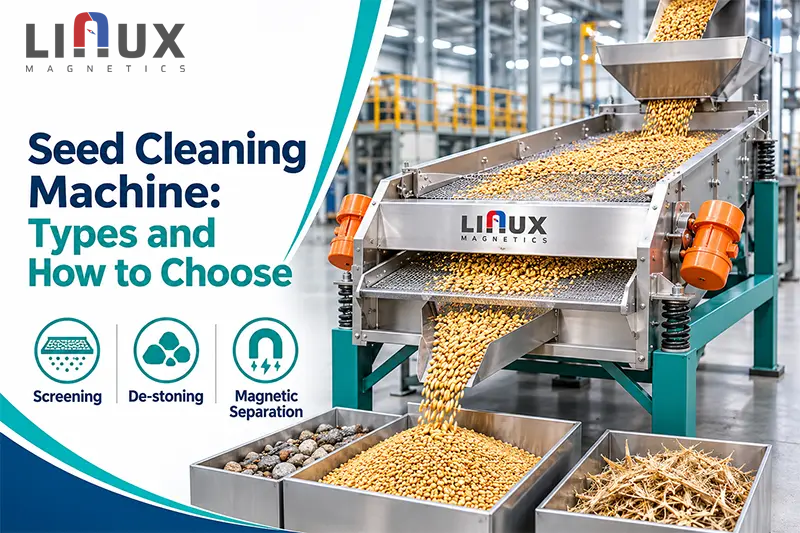
After harvest, the seeds may contain a number of impurities such as dust, chaff, stones, broken seeds, large seeds, and many others, which adversely affect their quality, as well as storage and processing. Using the proper seed cleaning machine will help to eliminate undesired substances and ensure preparation for further processing stages.
Linux Magnetics is an Ahmedabad based manufacturer and exporter of magnetic and vibratory equipment providing vibrating screens and magnetic de-stoners that can be used in seed cleaning processes.
How Does a Seed Cleaning Machine Work?
The material is processed through introduction of the material into the system, where there is separation of the unnecessary material and extraction of the cleaned material. The particular equipment used depends on the type of seeds to be cleaned and the cleaning standard.
The following section identifies the main stages of a seed cleaning application.
1. Feeding
The feeding system makes sure that the material is continuously fed into the cleaning system. The rate of feeding determines the thickness of the layer of the material and affects the efficiency of separation. The feeding system should be compatible with the process rate and the nature of the seeds/materials. The feeding system should also be compatible with the process rate and the nature of the seeds/materials.
2. Vibrating Screen
The vibrating screen is equipped with the screening medium which vibrates and thereby helps in moving the material. The motion helps in separation of oversized, undersized or any other undesired particles.
According to the design, the screen can remove oversized materials, undersized particles or both. It can also have multiple levels to separate the material into a range of size fractions.
Linux Magnetics supplies vibro screens that are suitable for screening, grading, sifting and similar applications. The product page highlights applications in the food industry, chemical industry, pharmaceuticals and other sectors. The machines can be suitable components of a seed cleaning system, depending on the application.
3. Grading and Screening
Depending on the need, the cleaning operation can include sieving of the seeds for obtaining certain sized particles. The nature and quantity of the sieving surfaces will be determined based on the material being used.
4. De stoning
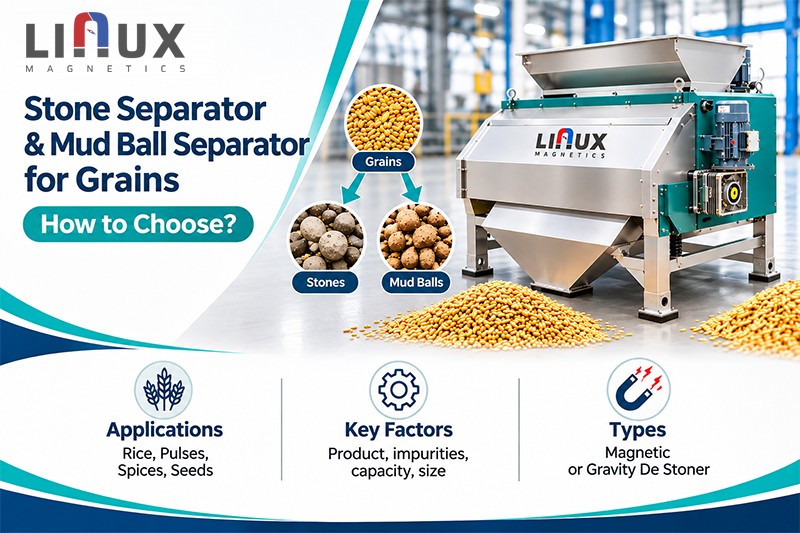
A de stoner is used to separate stones and other suitable heavy impurities from the seeds or grains. The machine uses the differences in the density of the material to effect the separation. Depending on the design, the de stoner may have a screening surface to remove oversized particles or other materials as well. Linux Magnetics supplies a magnetic de stoner, which can be used in applications involving grains, seeds, pulses, spices and other granular materials.
5. Magnetic Separator
A magnetic separator may be a part of a seed cleaning system where a removal of appropriate magnetic contaminants such as iron particles is required. It is mandatory to choose the magnetic separator depending on the properties of the material and the type of contaminates.
The magnetic separator is not a substitute for screening and de-stoning as a combination of different methods ensures effective cleaning. The machine selection must be according to the impurities that need to be removed.
Main Stages of Seed Cleaning
A complete seed cleaning line may have a number of stages, depending on the application. Not all seed cleaning applications involve all of the following stages. The stages must be designed according to the seeds, their characteristics and the required cleaning quality.
1. Pre-cleaning
Pre-cleaning involves the removal of larger impurities, dust or other unwanted materials. This stage may use screening equipment or another suitable cleaning method to prepare the material for the next cleaning stages.
2. Screening and Grading
Screening equipment separates material on the basis of size. The screening surface can have different aperture sizes to separate undersized, oversized or acceptable size fractions, depending on the application.
The screen aperture size depends on the seed size and the required result. The screen size must be appropriate for the seeds to ensure that they are not removed as waste or that larger impurities do not pass through.
3. De stoning
De stoning separates stones and other suitable heavy impurities from the seeds or other granular materials. Efficiency of the cleaning depends on the product and impurity properties and also on the construction of the destoner.
In cases where stones, mud balls, or any other impurities are present in the material, the most suitable method of separating the impurities should be recommended by the supplier.
4. Magnetic Separation
A magnetic separator removes suitable magnetic contaminants from the seed or material stream. The method can be applied when the process involves iron, or other magnetic materials.
5. Final Inspection and Packaging
After the cleaning step, the product can be checked for the quality of the product before the next process such as packaging.
The inspection procedure is determined by the product and quality required. It is best to confirm the expected output quality with the supplier before selecting the seed cleaning equipment.
Types of Machines
The following are the main types of seed cleaning machine:
1. Vibrating Screen Machine
A vibrating screen can be a component of a seed cleaning system to separate oversized or undersized particles. It can be used for screening, grading or size separation of suitable products.
Linux Magnetics has vibro screens, which are suitable for size screening and separation applications. The product page mentions the use of screens in the food industry, chemical industry, pharmaceuticals and other sectors.
2. Gyro Screen
A gyro screen uses a gyratory motion to screen materials. The equipment can be used in a range of applications, including screening and grading of dry, wet or fine materials, depending on the screen type and mesh size.
3. De stoner
A de stoner can be a suitable cleaning machine in applications involving seeds, grains, pulses or other materials where the process requires the removal of stones or other heavy impurities. Linux Magnetics has a magnetic de stoner, which can be applied to seeds, grains, pulses, spices and other granular materials.
4. Magnetic Separator
A magnetic separator is a cleaning equipment type that can be used in a seed cleaning application when there is a requirement to remove iron or other suitable magnetic impurities.
5. Integrated Seed Cleaning Line
An integrated cleaning line combines different cleaning stages in one system. Depending on the application, it can have screening, aspiration, de stoning, magnetic separation or other components.
How to Choose the Right Seed Cleaning Equipment
Selecting the right seed cleaning equipment will depend on the material and the intended use. The following steps can help in selecting the right machine.
1. Identify the Kind of Seed
The first step is the identification of seeds that require cleaning. Since each seed type has different features, this factor will determine the kind of cleaning machinery required.
2. Determine the Goal of the Cleaning Process
The next step is the identification of impurities to be separated from the seeds. Based on the impurities to be separated from the seeds, you will need to select one or more steps of cleaning, including screening, de-stoning, magnetic separation, and other methods.
3. Select the Correct Screening Size
If the cleaning application involves a vibrating screen, the size of the screen apertures is important. The apertures determine the size of the material that will pass through the screen.
The size of the apertures can be selected according to the size of the seeds or other granular materials. Oversized apertures will allow smaller impurities to pass through, whereas undersized apertures will prevent the seeds from passing through.
4. Confirm Processing Capacity
The processing capacity will be dependent upon processing rate of the seeds or other materials which is generally expressed in kg/hour or tonnes/hour. It is paramount that one establishes what the processing rate is needed and ensure that one confirms with the suppliers the capacity of the cleaning equipment for the designated application. The capacity can be dependent upon seed size, impurities, feed rate, moisture and desired cleaning result.
5. Check magnetic separation requirements
Where the application necessitates removal of iron or magnetic contaminants one must ensure that there is magnetic separator incorporated in the cleaning line. Although magnetic strength is a key element in the process of magnetic separation, the size and distance of the contaminants from the magnet plays a significant role.
6. Consider space and maintenance
It is essential that one establishes the dimensions of the cleaning equipment and location of feed and discharge openings. The space required will be dependent upon the type of cleaning line and number of equipment.
7. Ask about integration and support
Where a multi stage cleaning application is required, one must confirm from the suppliers if they can integrate the various components of the cleaning system. It is also vital that one ascertains availability of spare parts for the cleaning equipment.
Linux Magnetics Seed Cleaning Equipment: Specifications to Confirm
Linux Magnetics manufactures vibro screens, vibrating screening equipment and magnetic de stoners, which can be components of a seed cleaning application, depending on the material and the requirements.
The equipment can screen up to 500 mesh (approximately 0.028 mm) and changing the screen cloth takes approximately 3-5 minutes.
Why Choose Linux Magnetics?
When considering Linux Magnetics for seed cleaning equipment, buyers can:
- Specify the seed type and impurities that need to be removed
- Request a recommendation for the required cleaning stages
- Confirm the processing capacity and screen size for the intended application
- Ask whether magnetic separation is required and obtain relevant technical details
- Review the dimensions, power requirements and maintenance aspects
- Confirm aspects of installation, delivery, warranty and after-sales support
Conclusion
The right seed cleaning machine will depend on the seed type, the impurities that need to be removed, the processing capacity and the intended result.
When enquiring with Linux Magnetics, specify the material, throughput rate, impurities and the available space. Ask whether the company can supply the required equipment or an integrated cleaning system for the intended application.
For further information and product enquires, visit the Linux Magnetics Enquiry Page.